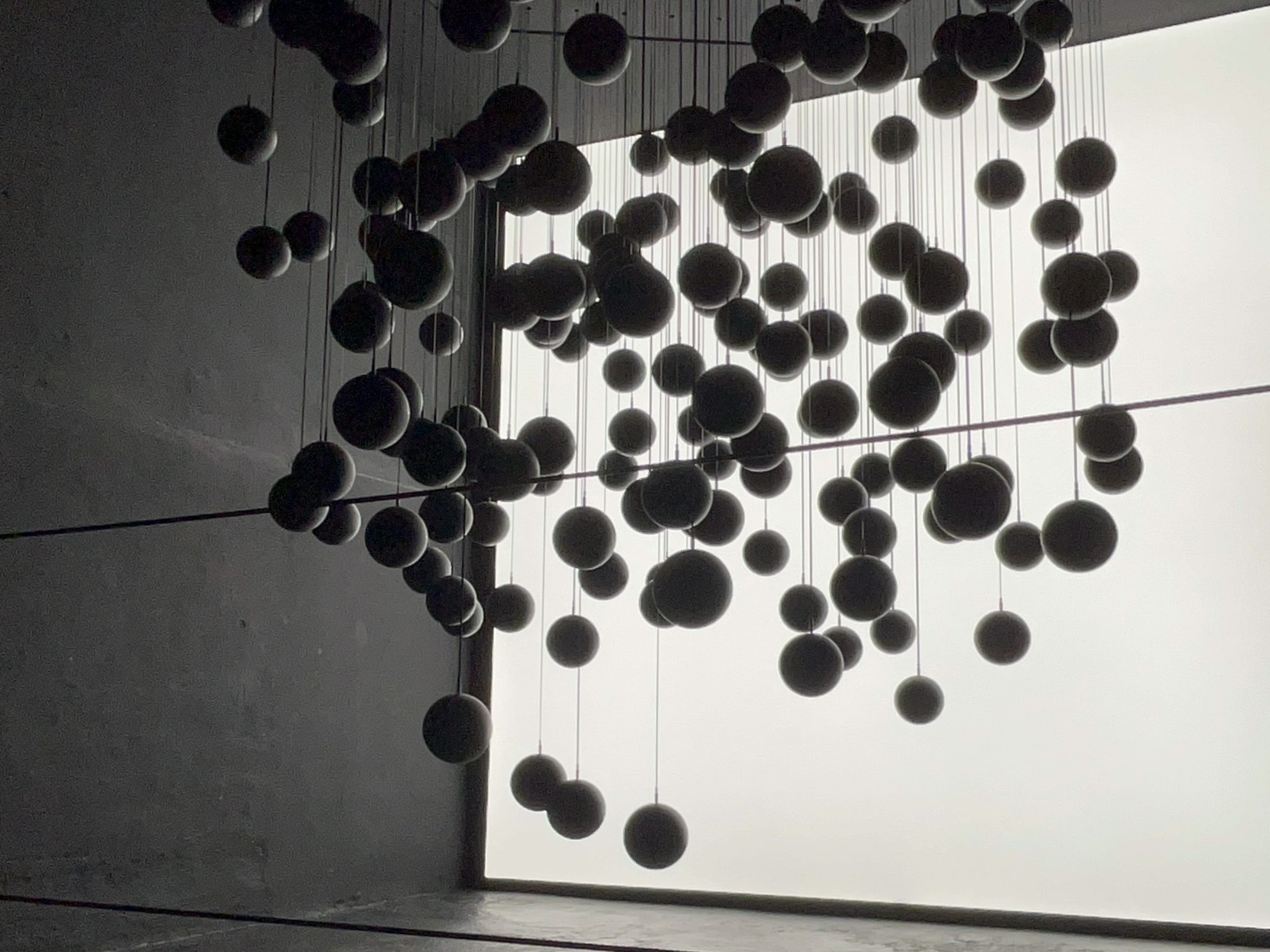
The ableist metaphor of the autistic bubble suggests that autistic individuals are fundamentally disconnected from the real world. It portrays a form of solipsism which neglects the various ways autistic people engage and negotiate with their environments.
With his theoretical biology, Jakob von Uexküll (2010) described the Umwelt – the perceptual-behavioural, or lived world of humans and animals – through the soap bubble metaphor. He believed that the Umwelten of various species or individuals were like predetermined and stable monads. Curiously enough, this monadism led some to describe Umwelt theory as ‘autistic’, reiterating the problematic metaphor for autistic asociality and disconnection.
But while the traditional view defines autistic bubbles as pathological, the autism metaphor for the Umwelt positions autistic bubbles as the prototype of animal and human embodiment in general. This echoes Cartesian doubt, where the observation that cogito ergo sum – I think, therefore I am – gives place to a form of epistemological solipsism.
And yet, the idea that we all live in bubbles disconnected from each other and from our surroundings does not stand up to closer scrutiny. How can paying closer attention to the dynamics of actual soap bubbles teach us something new about autistic (and more largely, human and animal) modes of being-in-the-world? How can it help subvert the traditional understanding of withdrawal and disconnecting as pathology?
The physics of soap bubbles illustrates a form of contingent stability in a world rife with ‘dangerous’ physical forces. The sphere, which requires the least energy to maintain, is perhaps the most stable shape. Smaller bubbles, forming more quickly and distorting less, seem more resilient, while larger ones, requiring more time and material to stabilise, are more prone to rupture. This extends to interactions – bubbles merging risk bursting, and those with larger surfaces are more exposed to external forces.
Admittedly, using a physics metaphor to describe complex biological and psychological processes like those relevant to autism comes with the risk of reducing neurodivergent experiences to the physico-chemical. However, I suggest this analysis can help us turn the traditional bubble metaphor for autism on its head by evidencing its inconsistencies.
Indeed, if it is true that soap bubbles are relatively stable, it is only to the extent that they don’t collide with each other or with other physical bodies. In this sense, the bubble metaphor presupposes a static world, devoid of interactions. In reality, hiding in one’s bubble is often a way of preserving oneself from the intensity of surrounding forces.
Similarly, the stability of soap bubbles relies on their small sizes. In an Uexküllian framework, a smaller Umwelt could mean less perceptual sensitivity to one’s surrounding environment, which doesn’t fare well with the idea of autistic sensory hypersensitivity. If there is such a thing as an autistic bubble, it is probably very large, and therefore particularly vulnerable to bursting.
By subverting the autistic bubble metaphor, I am trying to paint a more dynamic portrait of autistic a/sociality. While it is sometimes true that we, autistic people, need to isolate from the external world, it is not by nature, as the result of a pathology, or because we are not actually in the world to begin with. Instead, it is because we are in the world and feel the world so intensely.
Reference
Von Uexküll, Jakob. 2010. A Foray into the Worlds of Animals and Humans. With A Theory of Meaning. Minneapolis and London: Minnesota University Press.
This blog post is based on a forthcoming publication, ‘A Foray into the Bubbles ot Autistics: The Phenomenology of Being-in-the-world from Umwelt Theory to Intense World Theory’ for Minority Reports: Cultural Disability Studies (2025).


Leave a reply to L. Restrepo G. Cancel reply